Too Weak to Call, Strong Enough to Raise: Garrett Adelstein’s $60K Bluff
By Duncan Smith · Online Cash Game Pro
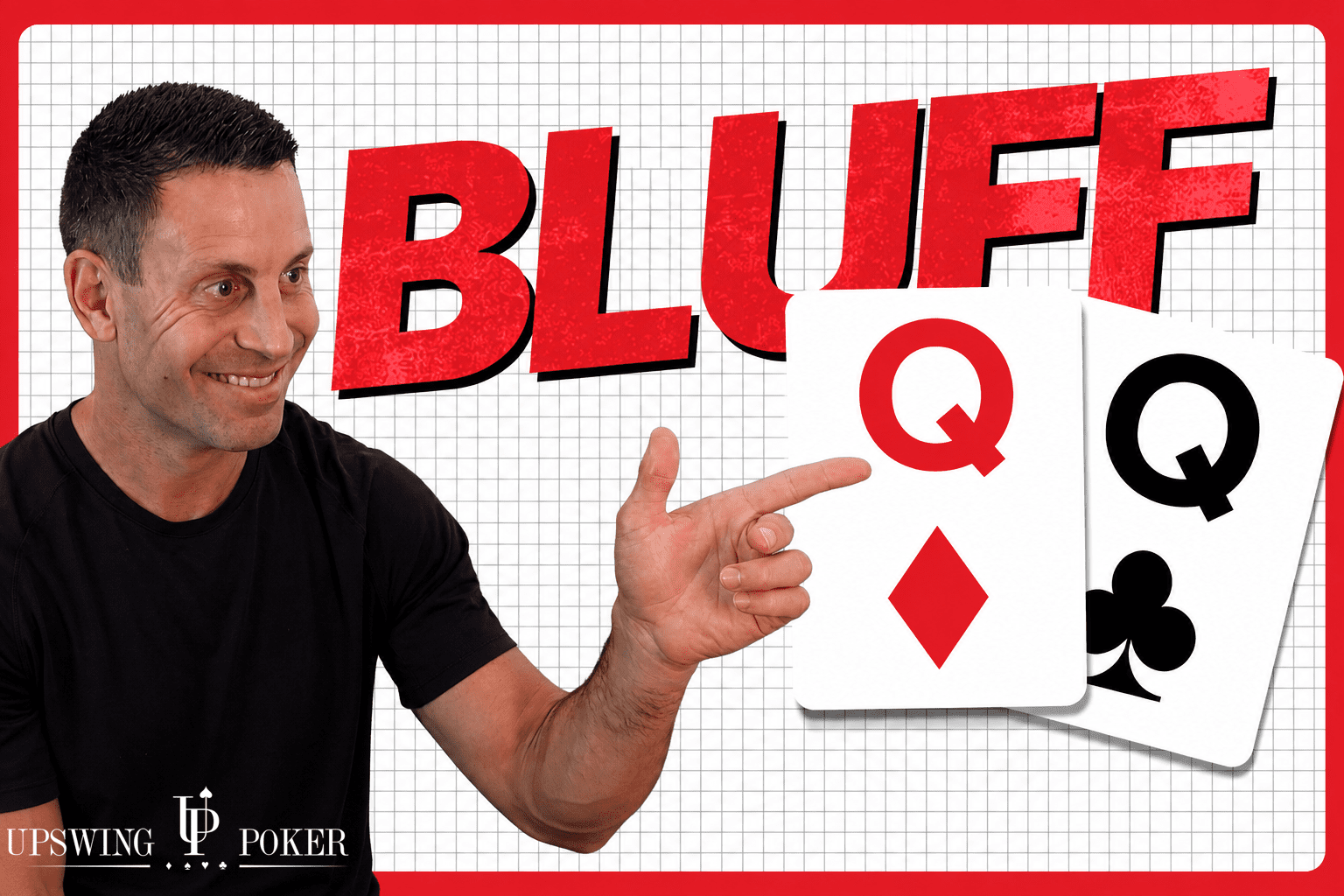
Garrett Adelstein had already become one of the biggest winners on Hustler Casino Live when he played this epic hand in September 2022.
He knew his pocket queens were no good on this river.
Aaron Zhang had just overbet $15,000 on the river, and the board had run out 9d 7h 8c 4d Jd. Several straights had arrived, the backdoor diamond draw had come in, and this had been a three-way pot until Andy Tsai folded to Aaron’s bet. Calling with Qd Qc was out of the question.
So Garrett chose a different direction and check-raised to $60,000.
The bluff worked. Aaron quickly folded Qh Tc for a queen-high straight, and Garrett got one through. His reasoning went well beyond simply deciding Aaron probably could not call:
- Garrett had one of the best possible hands to turn into a bluff.
- He believed Aaron was capable of making this huge bet with something weaker than a flush.
- He knew Aaron was a strong enough hand reader to understand how rarely anyone would be bluffing in Garrett’s spot.
As a result, one of Aaron’s biggest strengths as a poker player helped open the door to bluff him.
Keeping the Weaker Players In
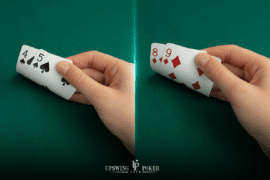
The game is $100/$200/$400 with a $200 big blind ante, and the effective stacks are more than 500bb deep. Garrett opens Qd Qc from the Cutoff, Aaron calls on the Button, and Andy completes the action from the straddle with 8s 8d after the small and middle blinds fold.
Garrett spends some time discussing Aaron’s preflop decision, particularly because recreational players are still left to act in the blinds. Considering this lineup, he thinks Aaron should do a great deal of calling on the Button rather than automatically pushing every strong hand into a 3-betting range.
In a game like this with the kind of lineup they’re playing against, 3-bet or fold is not a viable strategy.
A hand like KQ suited plays perfectly well multiway, while flatting also gives the weaker players behind a chance to enter the pot instead of immediately forcing them out.
This is an idea Garrett has touched on before in his videos. To learn more about how he adjusts his preflop strategy when recreational players are still left to act, check out our breakdown of his huge bluff against Patrik Antonius.
Andy has a decision from the straddle because he should expect Aaron to arrive here with a very wide range, making this an appealing squeeze spot with plenty of strong hands and selected bluffs. 88, though, comfortably calls.
A Bad Board For Pocket Queens
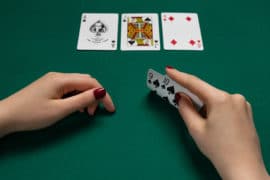
The flop comes 9d 7h 8c.
Andy checks his middle set, Garrett checks his overpair, and Aaron bets $2,000 with Qh Tc, giving him the nut straight draw and two overcards. Andy calls, and Garrett comes along behind him.
This is just about as uncomfortable a flop as Garrett could find for an overpair in a three-way pot. Both Andy and Aaron can have plenty of straights, sets and two-pair combinations, while their unmade hands will mostly be draws that can apply plenty of pressure across multiple streets.
Unlike overpairs like TT or JJ, Garrett’s hand does very little to block the strongest straight draws available to his opponents. With only two outs to improve when behind, he prefers to check his highest overpairs (QQ+) with no board interaction here very often.
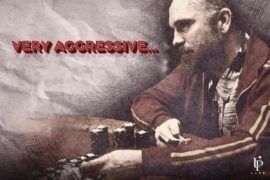
Andy’s decision facing Aaron’s bet is different. Garrett would generally prefer to see him check-raise sets more aggressively, particularly against Aaron, who he describes as creative, aggressive and not especially eager to fold strong hands. Slowplaying 88 has some merit with Garrett still behind, but Garrett would usually rather start building the pot.
Donking the flop is also an option for Andy, and is perfectly viable both with the hand that he holds as well as weak pairs with ways to improve like T7.
Andy calls, Garrett follows suit, and we go to a turn.
The Turn Checks Around And Sets The Stage
The 4d comes on the turn, putting a flush draw on the board. Andy checks, Garrett checks, and Aaron thinks for a moment before checking behind.
There may be no more uninteresting series of actions on a multiway street than checking around, but it did set things up for what’s to come.
Aaron can have diamond draws after betting the flop, but Garrett believes many of his natural diamond-diamond combinations would continue betting once the 4d converts them into flush draws. Hands like Ad 6d, Td 7d or Qd Td already had plenty of equity on the flop, and picking up a flush draw is often a green light to continue barreling for an aggressive player like Aaron.
Garrett is not claiming Aaron would never check those hands. He simply discounts them, which is a distinction that becomes even more valuable when the river completes the backdoor flush.
Queens Can’t Call, But They Don’t Have To Fold
The river comes the Jd.
Andy and Garrett check, and Aaron now has the queen-high straight with Qh Tc. He overbets $15,000 into a pot of $10,100, and Andy mucks his straight.
Garrett doesn’t consider calling. Despite Aaron’s aggressive reputation, he does not expect him to bluff this spot often enough for QQ to function as a bluff-catcher.
That does not mean Aaron is never bluffing, though, and that matters when considering a check-raise. Any bluffs Aaron does have will fold to the raise, while Garrett also believes Aaron is capable of making this huge river bet for value with strong hands weaker than a flush.
Specifically, he thinks Aaron can arrive here with a ten for a straight and use a large, greedy sizing with it.
That assumption is critical. If Aaron’s range were overwhelmingly flushes, raising would be disastrous.
“I’m confident two queens are no good, but I’ve got the perfect hand and opponent to go crazy.”
However, Aaron is different than most live players. Garrett has seen him make thin value bets before, and he believes Aaron is fully capable of putting $15,000 into the middle with a straight.
Once Garrett puts these pieces together, Qd Qc becomes a great hand with which to fight back.
Why QQ Is Such a Good Bluff
Garrett’s blockers with this hand are excellent. The Qd removes diamond flushes from Aaron’s range, while holding two queens cuts down the number of Qx Tx combinations Aaron can have.
It would be easy to stop there and say Garrett has good blockers; therefore, he has a bluff. His actual thought process is much more specific.
The cards identify Qd Qc as a favorable bluff candidate, but the exploitative information is what convinces him to pull the trigger. Garrett believes Aaron can overbet a straight, believes Aaron’s turn check makes some flushes less likely, and knows Aaron is capable of having at least a few bluffs himself.
There is also a final ingredient: Aaron is a great hand reader.
Normally, that’s a pretty good reason to avoid trying to run a huge bluff. However, Garrett believes it works in his favor here.
Using a Great Hand Reader Against Himself
Consider what Garrett’s line is supposed to represent.
Three players reached the river on 9d 7h 8c 4d Jd, Aaron fired a 1.5x pot overbet, and Garrett responded by check-raising to $60,000. This is not exactly a spot where live players are falling over themselves to find bluffs.
Garrett knows that. More importantly, Aaron knows it too, and he knows that Garrett knows it (and on and on).
That is what makes Aaron’s hand-reading ability relevant. Garrett expects him to understand that players almost never show up with air after taking this line, particularly when the bettor has already announced a very strong range by overbetting the river. If Garrett now comes over the top with a check-raise, his hand just looks like a flush, end of story.
So he makes it $60,000.
Aaron folds his straight almost immediately.
Theory Helps Find The Bluff Candidate, And The Opponent Seals It
You could watch this hand and come away thinking the lesson is that great blockers create great bluffs, end of story. Garrett’s explanation is more nuanced.
Against most opponents, he would just fold Qd Qc and move on. If their large river overbet almost always means a flush, having a top-notch blocker does not suddenly make attacking that range profitable.
The Qd makes Garrett’s hand one where bluffing is viable. His understanding of Aaron is what makes the bluff runnable:
- Garrett believes Aaron can value bet thinner than most players.
- He believes the turn action removes some flushes from Aaron’s range.
- He trusts Aaron to understand just how terrifying a check-raise in this particular spot is supposed to be.
Pocket queens were far too weak to call, but against the right opponent, they were perfect to raise.