How Garrett Adelstein Used a Weak Player to Bluff Patrik Antonius
By Duncan Smith · Online Cash Game Pro
Garrett Adelstein had not played poker in more than a year when he sat down in a $100/$200/$400 game with a $200 ante in December 2023. Rather than ease back in, he immediately found himself in a massive pot against Patrik Antonius, a player he admired growing up.
The video above includes a free full lesson from Garrett’s upcoming course, Destroy Live Cash.
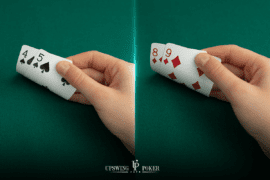
The hand ended with Garrett firing a $112,000 river bluff holding As Ts. But the most important part was not the size of the bluff, the opponent, or even the fact that it worked.
It was the presence of a third player.
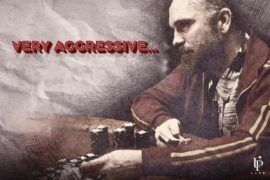
Curtis, an action player Garrett had studied before the session, remained in the pot through the turn. After studying video of Curtis’s play, Garrett believed his ranges were unusually wide, and his body language suggested weakness. That information allowed Garrett to take a line that would have looked reckless in a normal multiway pot.
Curtis’s presence also forced Patrik to make every decision with another player behind him. Garrett was not simply exploiting the weakest player. Rather, he was using that player to put one of the best players in the world in an incredibly difficult spot.
Building the Right Multiway Flop Bluffing Range
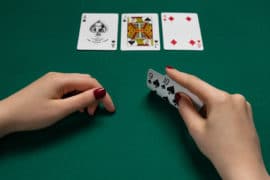
Patrik opened to $1,200 from Middle Position (MP) with 9h 8h. Eric Persson called, Curtis called from the Cutoff, and Garrett squeezed to $6,000 on the Button with As Ts. Patrik and Curtis called.
The flop came 8c 4s 3h. Both players checked, and Garrett bet half pot.
The temptation on this low board is to recognize that the preflop aggressor has overpairs and begin betting nearly every unpaired Broadway hand. Garrett warns against that reckless approach. A multiway continuation bet requires a higher value threshold, so strict bluff selection is necessary.
“It looks pretty scary for me to be betting the flop and turn three ways. And yet, in reality, I can get away with bluffing a good bit.”
Garrett’s preferred value region begins with vulnerable hands such as 8x and 99 or better. His bluffs should come from hands with useful backdoor equity or immediate straight potential.
As Ts falls into that mixed region. An ace may produce the best hand, a spade on the turn gives Garrett the nut-flush draw, and the hand has little value checking toward showdown against two opponents.
The bet also creates a problem for Patrik.
With Curtis still behind, Patrik cannot continue as freely as he could heads-up. Calling a marginal pair or weak draw risks inviting a stronger hand into the pot. Raising an 8x hand is also unattractive because it isolates Garrett’s strongest hands and drives out the player Patrik most wants to keep involved. An 8 is simply not strong enough to reopen the betting by raising Garrett’s very strong c-bet.
Curtis calls with 77, although Garrett believes his hand is too weak to continue here. Based on Curtis’s loose preflop range, prior play, and physical demeanor, Garrett does not interpret the call as strength. He believes it can contain weak pairs, marginal 3x or 4x hands, and even some overcards.
That read becomes the foundation of everything that follows.

The Turn: Bluffing a Card That Shouldn’t Always Be Bluffed
The turn was the 6h, one of the least favorable cards in the deck for Garrett’s range.
Garrett should almost never have 66 here. Hands such as 8x 6x, 7x 5x, and 6x 4x are also difficult for him to reach the flop with after squeezing Patrik’s MP open. Curtis, by contrast, can credibly have all of them.
From a structural perspective, this should slow Garrett down. Instead, he bet $35,000, roughly 70% pot.
This decision shapes the way the rest of the hand flows.
Garrett barrels because he believes actual recreational players will not defend the turn as their theoretical ranges suggest they should.
Curtis may own more nutted combinations, but Garrett believes most of his range is weak. His loose preflop range produced many marginal flop continues, and Garrett again sensed that Curtis wanted the action to stop. The danger represented by Curtis’s strongest hands mattered less than the weakness Garrett believed was present in practice.
At the same time, betting into two players made Garrett’s range appear exceptionally strong to Patrik. Most players drastically underbluff this turn, especially with two overcards. They may find natural heart draws or obvious straight draws, but they rarely continue with As Ts.
That creates a profitable disconnect. Garrett believes he can bluff more often because Curtis is weak, but Patrik may still evaluate the bet as though Garrett is firing into two legitimately strong ranges.
For Patrik to counter correctly, he would need to recognize Garrett’s read on Curtis, believe Garrett trusted it enough to widen his barrel range, and then adjust by calling more lightly. Garrett doubted Patrik would confidently make every step in that chain.
“Does Patrik Antonius know this? And as a result, does he assume I’m going to barrel much wider? My answer is: I doubt it.”
The best leveling decisions come from identifying where an opponent is likely to stop. Garrett expected Patrik to see a large multiway barrel and assign it substantial strength, not conclude that Garrett had diagnosed Curtis as weak and was attacking much wider than normal.
Why Patrik Calls Instead of Raising
Patrik held 9h 8h, giving him top pair and a flush draw. His call is perfectly reasonable, but the logic at play shows how Curtis affects both Garrett and Antonius in opposite ways.
Garrett attacks because he expects Curtis to fold. Patrik’s hand has too much equity to fold, and he calls rather than raises because he wants Curtis to continue.
Raising accomplishes little. Patrik is already ahead of Garrett’s bluffs, while stronger hands are unlikely to fold. A raise could also force Curtis out with exactly the type of hand Patrik wants to preserve.
The same player who gives Garrett permission to bluff also discourages Patrik from responding aggressively.
Curtis eventually folds his 77. By then, however, he has already impacted this hand. His presence helped Garrett represent greater strength and constrained Patrik’s decisions.
The River Bluff and the Value Problem
The river was the 5c, completing a four-liner to a straight. Patrik checked, and Garrett moved all in for slightly less than the pot.
At first glance, As Ts may look like a questionable choice to bluff with. However, this hand has no meaningful showdown value, leaves most of Patrik’s 8x combinations available, and has told a believable story on its way to the river. It is imperfect, but there may be few perfect candidates.
More important than Garrett’s bluffing choices, however, is the value range he reaches the river with. After all, if Garrett has very few value combinations, he can support correspondingly few bluffs, so determining his value range is vital.
His obvious straights include some A7, 97, 75, 76, and A2 suited, depending on how often he squeezes those hands preflop. The more provocative possibility is that Garrett may also shove aces or kings for thin value.
If overpairs always check, his value range becomes narrow and Patrik’s bluff-catchers improve. If Garrett can credibly jam AA, believing Patrik may call with enough 8x or pocket pairs, the bluff has more structural support.
Garrett openly considers the possibility that the bluff was overambitious and that he may be defending a play because it worked. That uncertainty is part of what makes the hand instructive. The river depends heavily on Garrett’s preflop squeezing range, his willingness to value bet thinly, and Patrik’s perception of both.
“If Patrik can get a read on me, then he gets the chips. It’s really that simple.”
Patrik ultimately folded.
However, recognizing when the option is available can set you apart from the field and help you find more creative bluffing lines.
Garrett explores that psychological side of high-stakes poker in much greater depth in his upcoming book, Beneath the Cards, which is available for preorder now.
And for the strategy behind decisions like these — from building preflop ranges around weak players to finding the bluffs required on intimidating board textures — Garrett goes much deeper in his upcoming Upswing Poker course, Destroy Live Cash.