3 Flop Mistakes You’re Making Without Knowing It
The flop is the second most common node you will play (after preflop), and decisions here have big ramifications for how the rest of the hand plays out. Betting or checking, calling or raising with a certain hand means that you’re going to face an entirely different range on the following streets.
Not only does it affect your optimal strategy on future streets, but it also affects your opponent’s optimal strategy on the previous street as well. This means that flop mistakes can create preflop exploits for your opponent. That may sound unexpected, but I’ll explain why that is later in this article.
So, in this article, I am going to break down 3 flop mistakes you are likely making without knowing it and how they could be part of the reason why you’re not winning as much as you’d like.
Let’s get into it!
Flop Mistake #1 – Raising too infrequently
This one is really common, which is why I placed it first.
Raising or check-raising is mandatory if you want to play a really tough-to-beat strategy.
You can imagine raising as a counter-punch in boxing. Without frequent raising, you are basically a punching bag with a weak, predictable counter-punch mechanism attached to it.
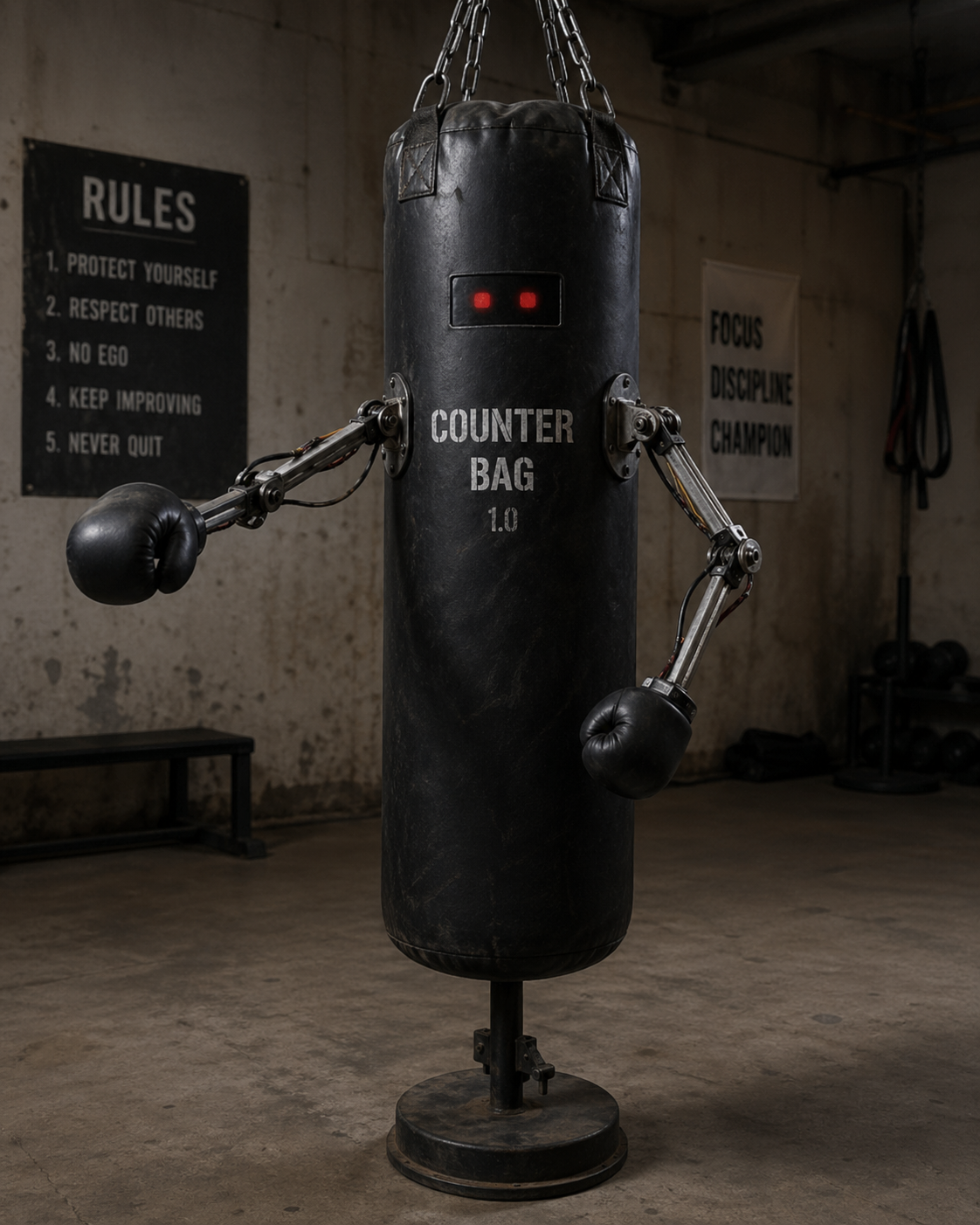
If your opponent is smart and he understands that your counter-punching is very predictable (aka you tend to raise too value heavy), he will start hitting you with bets much more frequently, winning way more pots than he should, and realizing more equity at your expense, as he doesn’t allow you to see the turn for free as often, while he buys both the turn and river card for a cheap price.
If you implement an aggressive counter-punching strategy, your opponent will understand that he can’t get free shots and will be more tentative with his own aggression, allowing you to see more free turns and thus realize more equity.
If we go a level deeper here, if you’re playing against an elite-level player and he understands that you’re not going to check-raise him enough, for example, he will start making some preflop adjustments as well.
Not getting check-raised increases the expected value of a c-bet by a significant margin. This means that c-bet bluffing is higher expected value (EV) than you would expect. This further means that hands that were folding preflop, which often miss the flop, suddenly expect to generate more EV by bluffing on the flop. And since this is a high-frequency situation, this has a significant impact on the expected value of open-raising preflop.
Let’s take an example.
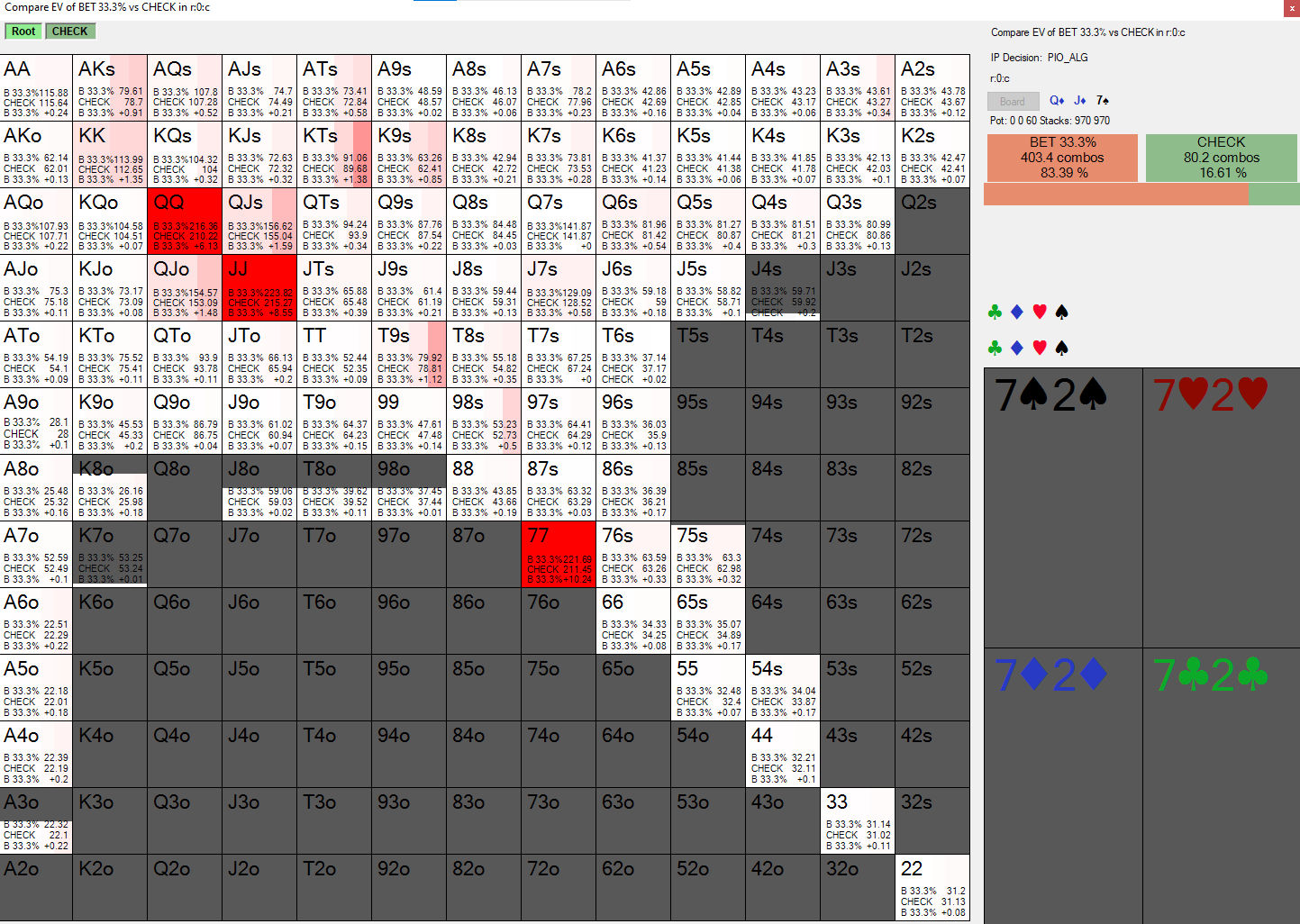
You open-raised on the Button and the Big Blind called. The flop comes Qd Jd 7s.
Here’s the EV of c-betting 33% pot compared to EV of checking back (in percentage of the pot being captured). Remember, the stronger the red color is, the better betting is relative to checking.
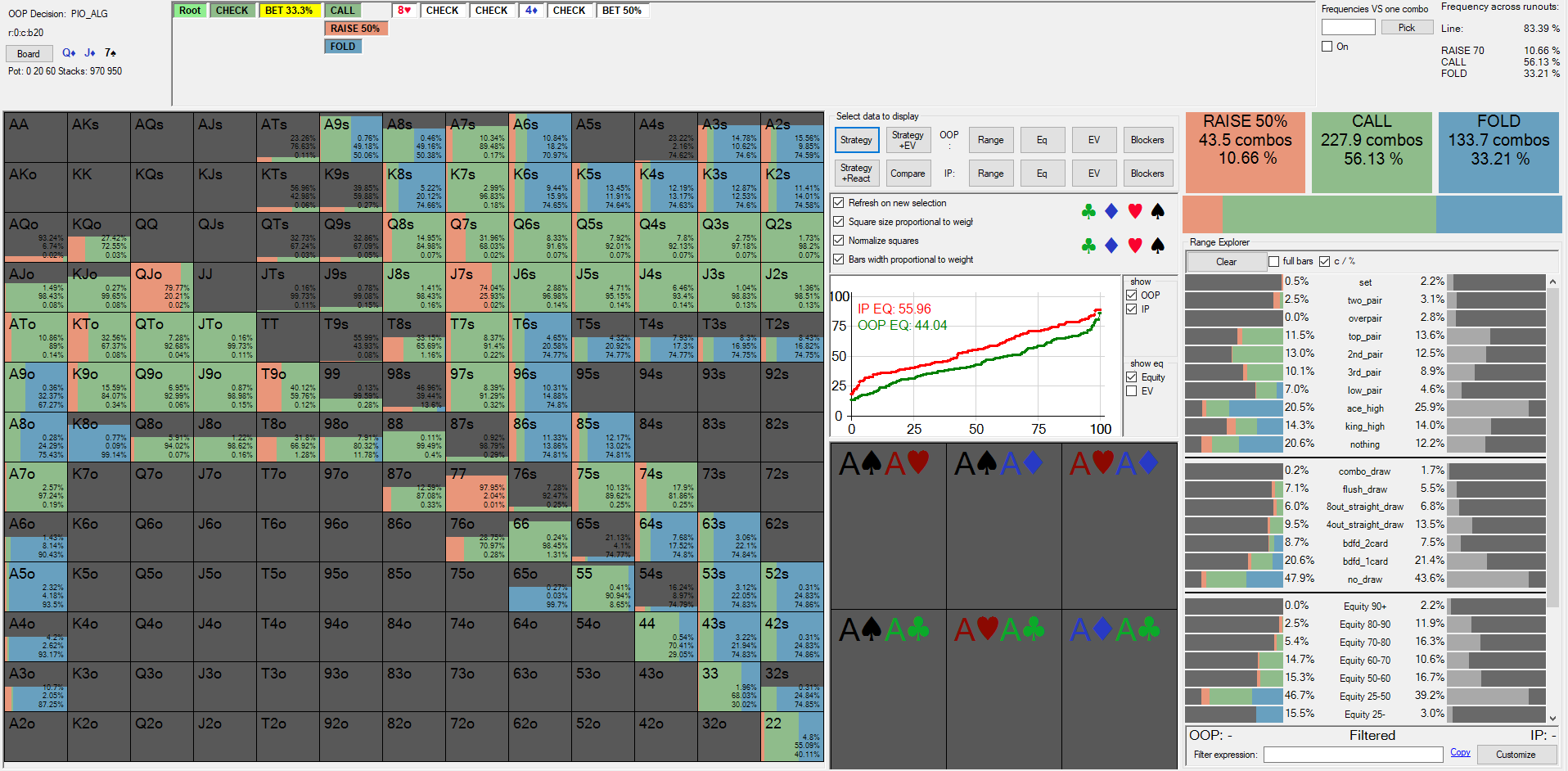
Now, villain’s GTO strategy in this spot is to check-raise 11% of the time against this bet.
Now here’s what happens to the EV of each hand if we strip some of the bluffs away.
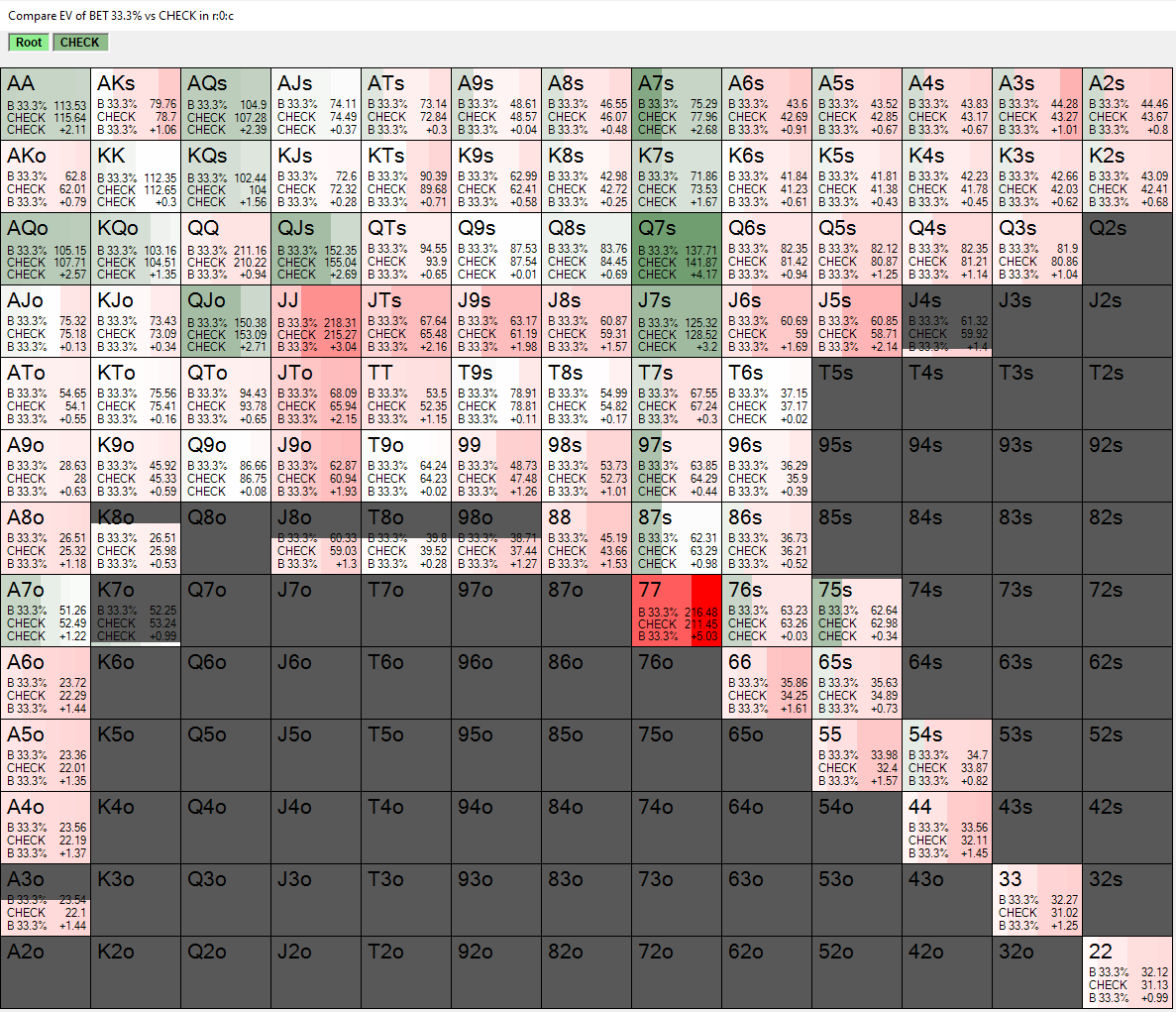
Remember, the EV of checking hasn’t changed, only the EV of betting. We can see that the red color is now much stronger for the vast majority of hands, especially for the weakest hands.
Let’s compare the change for a trashy hand like Kh4h:
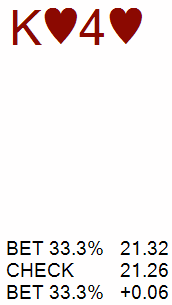
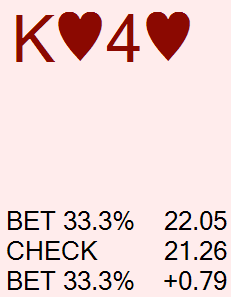
(before) (after)
We can see that this hand now wins ~0.8% more of the pot than it did in the GTO model, which, by the way, assumes no more mistakes on the villain’s end on the turn and river. That is completely unreasonable for a player who has this leak in his game.
Since the pot is around 5.5 big blinds right now, that translates to a gain of 0.045 big blinds per hand every time you see the flop. While this doesn’t seem like a lot, it allows you to expand your open-raising range to include hands such as these:
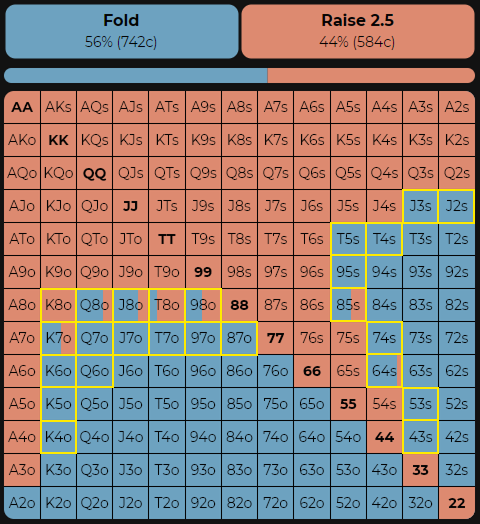
Flop Mistake #2 – Not Floating Enough
The second biggest mistake I see players make, and this is especially true when they play in position, is folding too easily on the flop.
I am talking about the weakest parts of their range here.
Let’s take a quick blind vs blind example. You open-raise in the Small Blind and the Big Blind calls. The flop comes Qc 8c 5d, and you bet 33% pot.
Their defense should include hands such as Ac 4h, Ac 3s, Kd 4d, Ah 7c, etc. K2-K7s, K9s, and A6o work their way in as well.
Take a look here, using Upswing’s Lucid Poker solver:
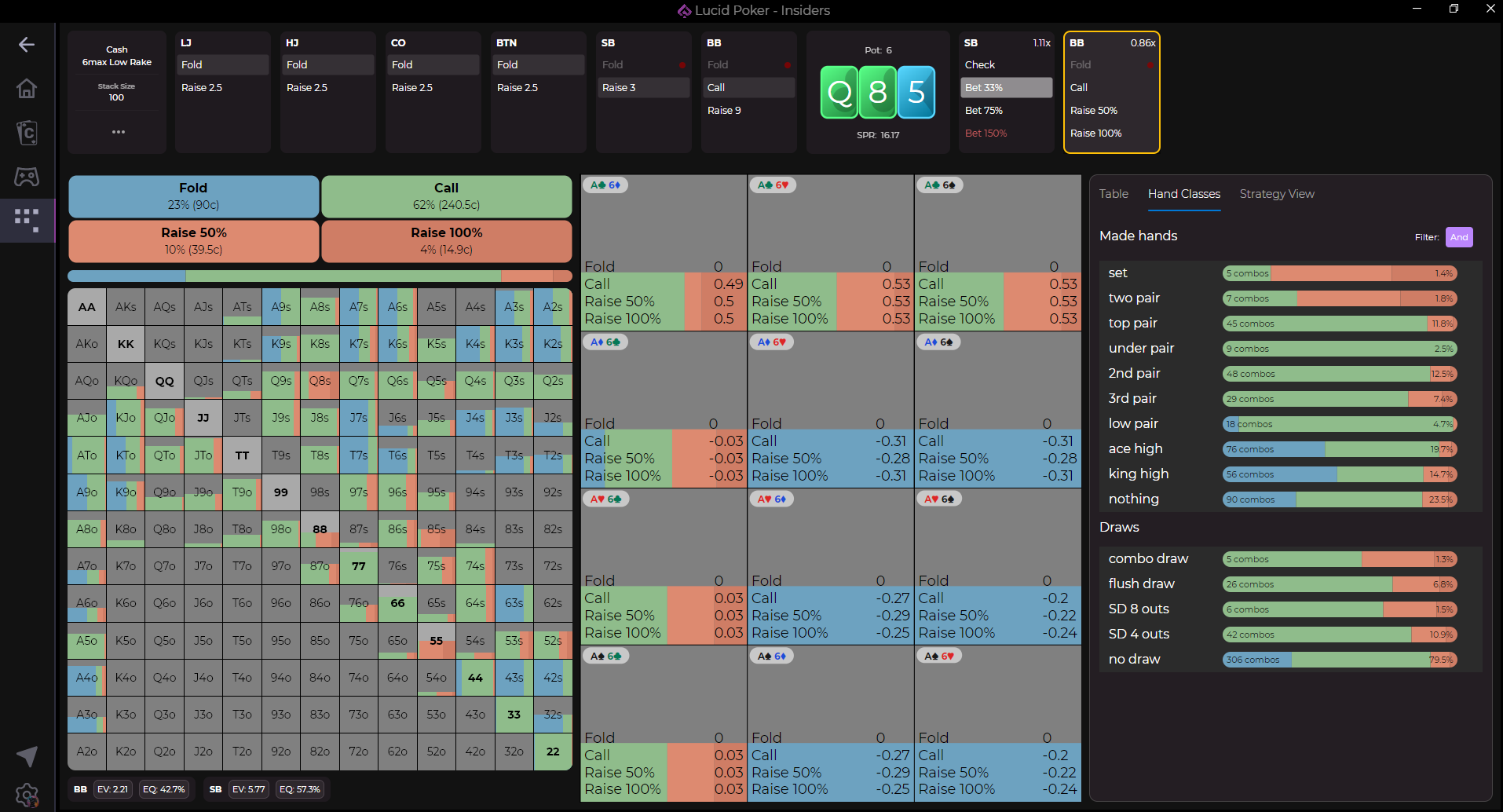
Not only should they be defending with them, they should be raising with them as well, which ties into the #1 flop mistake that I mentioned.
Not defending with these types of hands has two downstream effects.
The first order effect is that the Small Blind can simply start bluff c-betting a ton as an exploit.
The second order effect is that he can start betting on the flop and then easily check-folding on the turn with a large amount of his pure bluff-catchers. This happens because the turn stabbing range will simply be too strong. One of the functions of these weak floats was to balance the turn stabbing range. Without them, that range will be too face up.

Flop Mistake #3 – Checking Too Often with Very Weak Hands
This one is most common when playing in position, but happens out of position as well. It’s so common actually that I even see it at 500nl and higher online.
Let’s work off of an example to make it easier. Say you open-raised on the Button and the Big Blind called. You get dealt an Ad 8s 5s flop.
What is your first thought when seeing Kc 2c, or Qh 4h, or Qh 9d, or Th 9c?
You most likely have a bit of internal disgust and check back.
What if I told you that in this exact spot, these hands should be betting the majority of the time. Check it out:
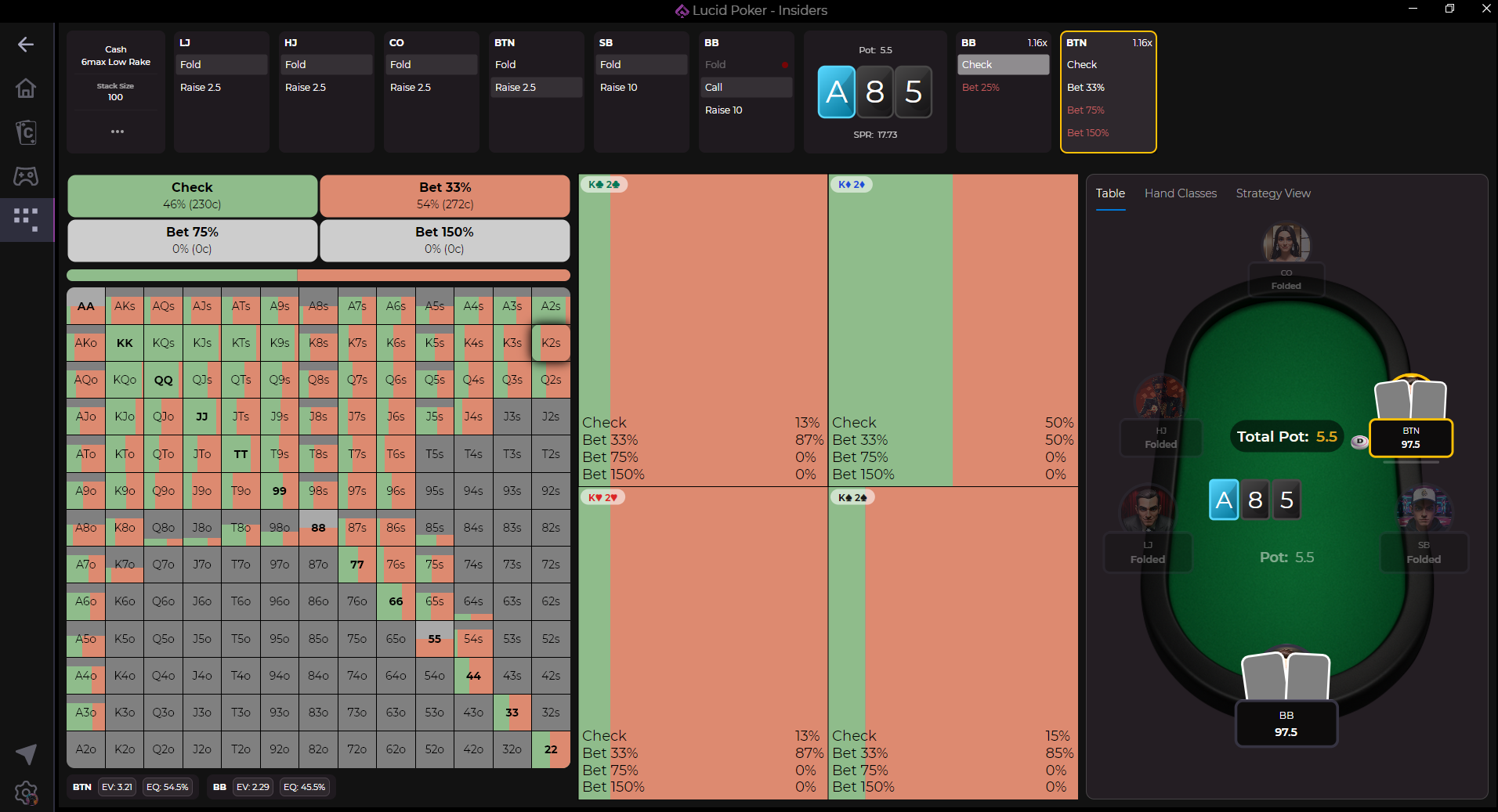
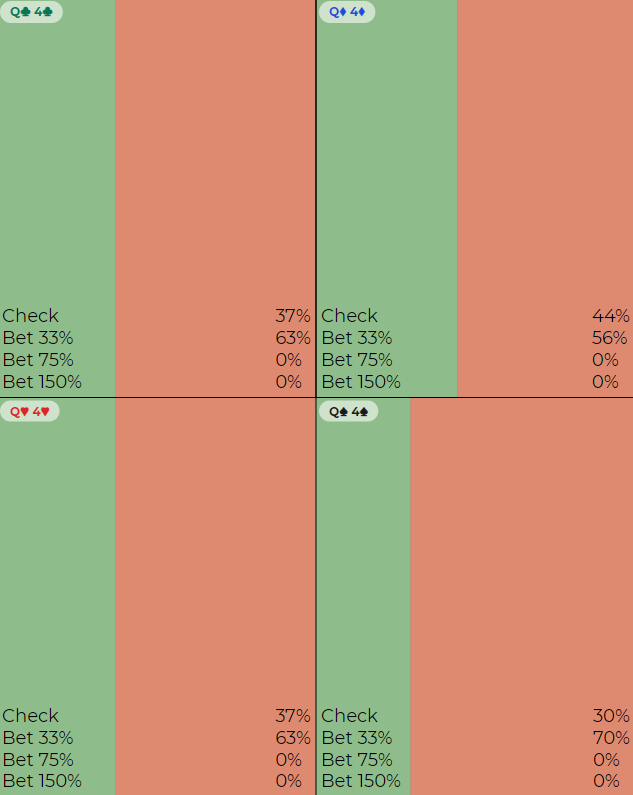
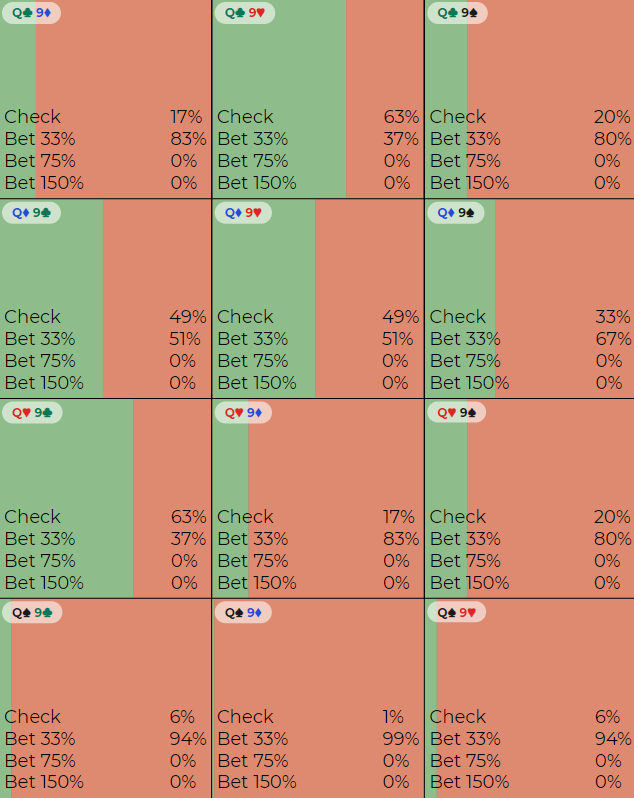
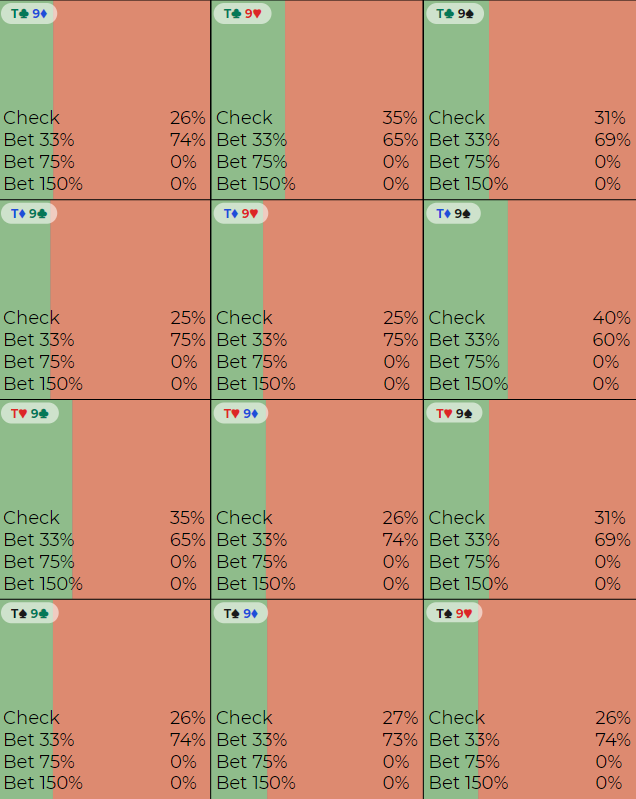
Now, I just want to be super clear: This is not NECESSARILY a mistake.
If you have a very good reason, one that you could write out on a piece of paper, then it might very well be the best play.
These reasons could be:
- You’re playing against an aggressive calling station (over-raises and over-calls)
- Your opponent plays very well on the flop but folds to delayed c-bets too often
- Your opponent plays very well on the flop and turn but folds to the river double delayed c-bet
There are more reasons that could push this hand into the checking line as the highest EV line in practice, but if you can’t name the exact reason, then betting should be your highest frequency play.
I would argue that it is very likely that you are playing in games where c-betting all the time is optimal, and it’s because most of your opponents make mistakes #1 and #2: not check-raising enough and not floating wide enough.
If we look over what the optimal strategy is for the Big Blind, we will see that he needs to check-raise with roughly half of his gutshots and flush draws, all of his combo-draws, and a bunch of low pairs like 52s, 53s, 75s. He should also slow-play with his two pair roughly half the time.
Most of your opponents will be forgetting to check-raise with their low pairs, mostly lean towards check-raising with flush draws rather than gutshots, and will almost always check-raise with their two pair.
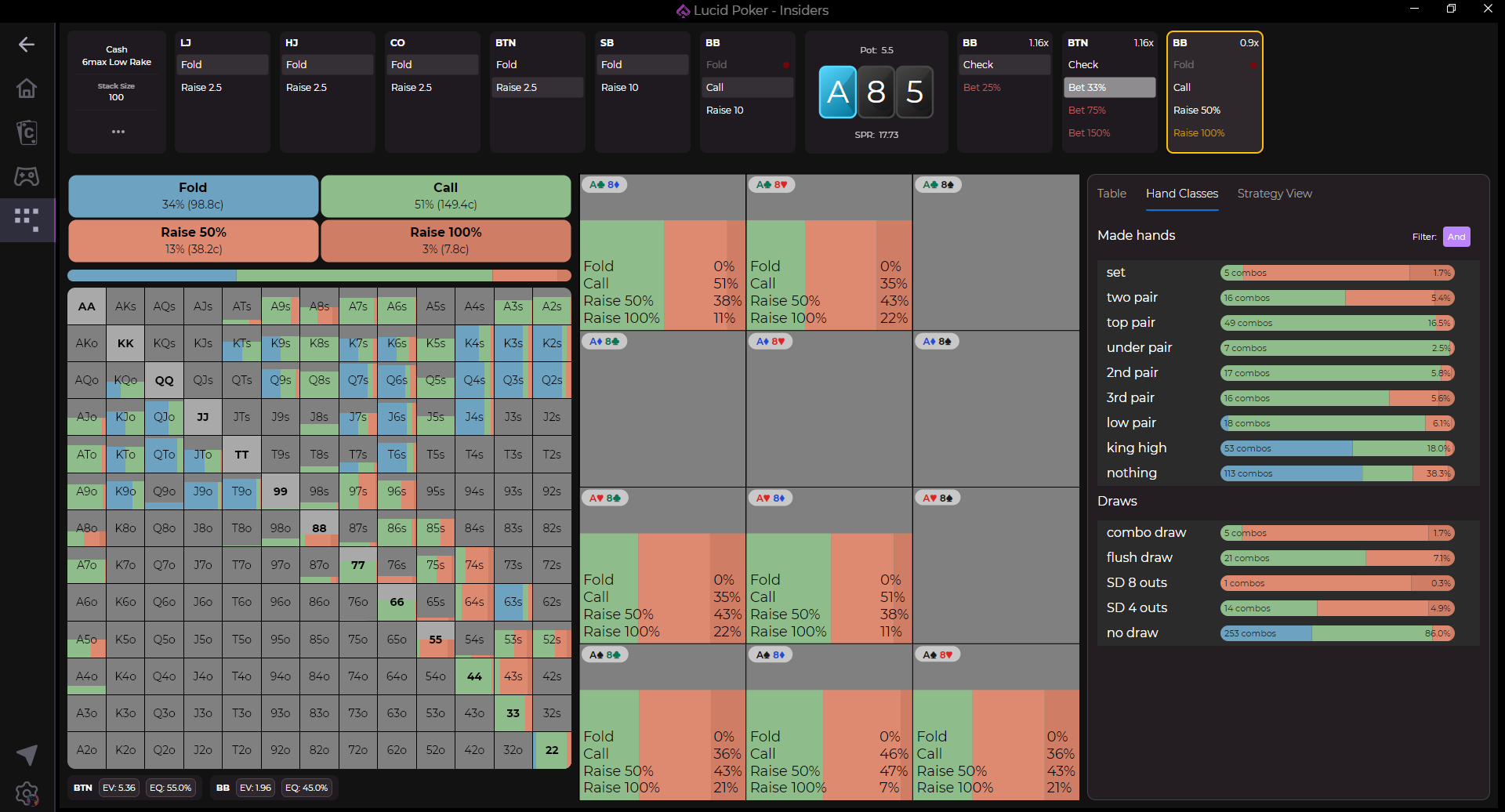
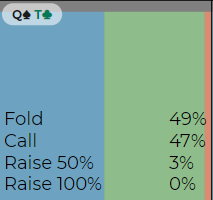
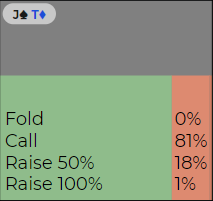
On the floating side, they will forget to check-call with hands like Qs Tc, or Js Td.
Conclusion
Poker is a game where, over the long run, everyone is dealt the same hands and the same boards. You both get the same amount of good hands and bad hands, good spots and bad spots.
Your edge lies in the difference between how you play each hand in each situation differently from how your opponents are playing the exact same situations.
Playing the strong hands correctly is easy. Playing the middling and lower parts of your range properly is where the edge exists because there are many more of them and the right strategy is harder to find and execute.
That’s all for this article!
‘Til next time, good luck, grinders!
To learn more about how to build a strategic gameplan, read: 3 Concepts That Should Shape Your Postflop Strategy.